The difference between 316 stainless steel and 304 stainless steel
- Different standard materials:
304 stainless steel can resist chemical oxidation; 304 is the e69da5e887aa62616964757a686964616f31333431366334 material that must be used in the national pressure cooker standard. The standard material of stainless steel pressure cooker is 304 or more. Because there are not many pressure cooker production factories approved by the state, these factories are very honest and all are the lowest Standard 304 stainless steel material.
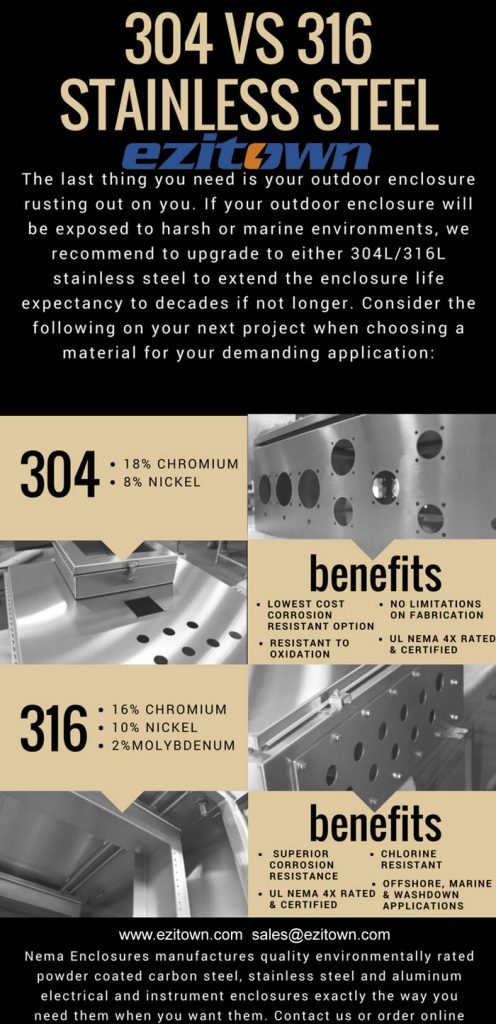
The 316 stainless steel high-end products are made of 10% nickel to make the stainless steel more durable and corrosion-resistant. This stainless steel is called 18-10 stainless steel, which is “medical stainless steel”, and there is no metal ion precipitation.
- Different chemical composition:
First of all, 316 stainless steel contains Mo, which is more resistant to corrosion in high temperature environments than 304 stainless steel. Therefore, engineers generally choose 316 material parts in high temperature environments.
Secondly, there are differences between the two in terms of grades; 304 stainless steel corresponds to Chinese grade 0Cr18Ni9; 316 stainless steel corresponds to Chinese grade 0Cr17Ni12Mo2.
- Different practical performance:
16 is mainly to reduce the content of Cr, increase the content of Ni and increase Mo2%~3%. Therefore, its corrosion resistance is stronger than 304, and it is suitable for use in chemical, seawater and other environments. Similarly, the cost of 316 is also higher than that of 304. Generally, 316 is used in places with higher requirements instead of 304.
- Different maintenance methods:
Compared with 316 stainless steel, 304 has better corrosion resistance, oxidation resistance and processability.
- Different prices:
The price of 316 stainless steel is about twice that of 304.
No metal can be “recognized easily” by eye if you need to reliably tell 201 / 304 / 316 / 316L apart—especially for marine outdoor use.
But there IS one practical way that is easy, fast, and reliable
✅ The easiest reliable way (industry standard)
Handheld XRF analyzer
-
Takes 2–5 seconds
-
Non-destructive
-
Clearly shows:
-
Mo present → 316 / 316L
-
No Mo → NOT marine grade
-
-
Used everywhere: ports, shipyards, steel warehouses
If you can choose one “easy recognition method”, this is it.
⚠️ What does NOT work reliably (common myths)
| Method | Why it fails |
|---|---|
| Visual inspection | 201 / 304 / 316 look identical |
| Magnet | Cold work causes false positives |
| Weight | Differences are too small |
| Spark test | Not accurate for stainless |
| Price | Fake 304/316 is common |
“Easy” field clues (use together, not alone)
These raise suspicion, but don’t prove grade:
-
Strong magnet attraction → likely 201
-
Rust within weeks outdoors → not 316
-
No Mo in XRF report → not 316
-
Supplier avoids MTC → red flag
Important truth (marine projects)
If a material can be “recognized easily by hand”,
it is NOT safe for marine outdoor use.
Marine-grade stainless must be verified, not guessed.
If you absolutely have no XRF access
Minimum safe combo:
-
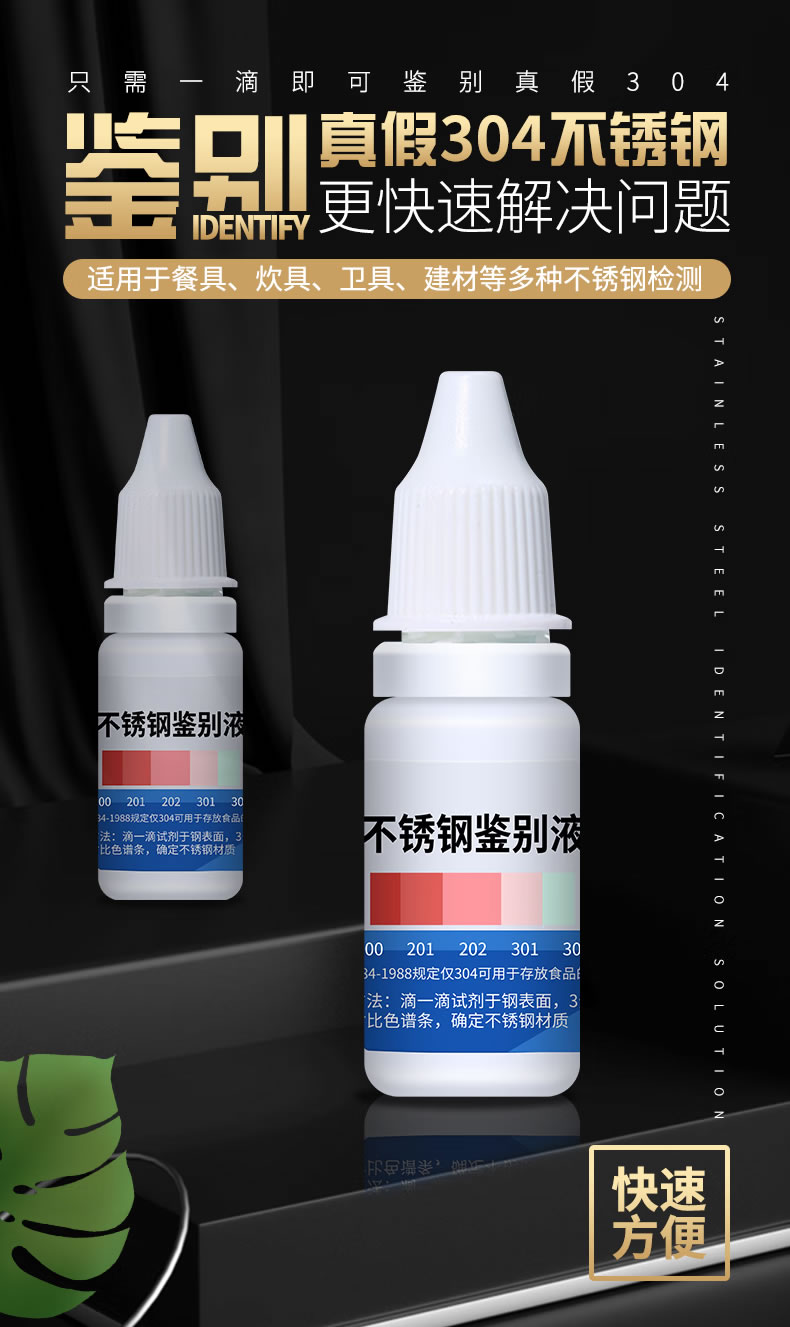
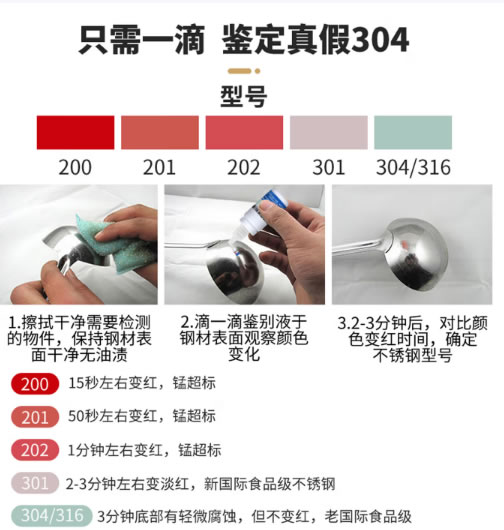
Acid test → rule out 201
-
Magnet test → screen
-
Supplier MTC → confirm grade
-
Passivation after fabrication
Still less safe than XRF.
✅ Final recommendation
For sheet / outdoor / marine:
-
Material: SUS 316L
-
Recognition: XRF only
-
Anything “easy by eye” → not acceptable risk
- the most easy way to recognize the material